RAB Logistics
1 / 5
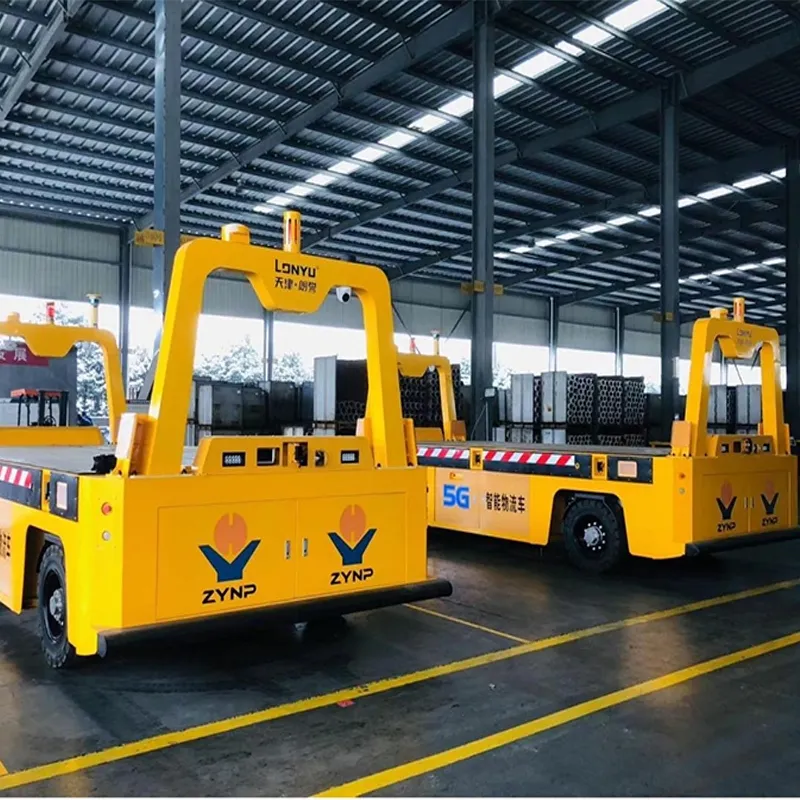
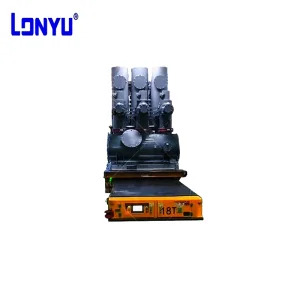
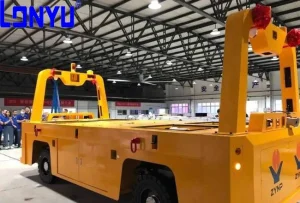
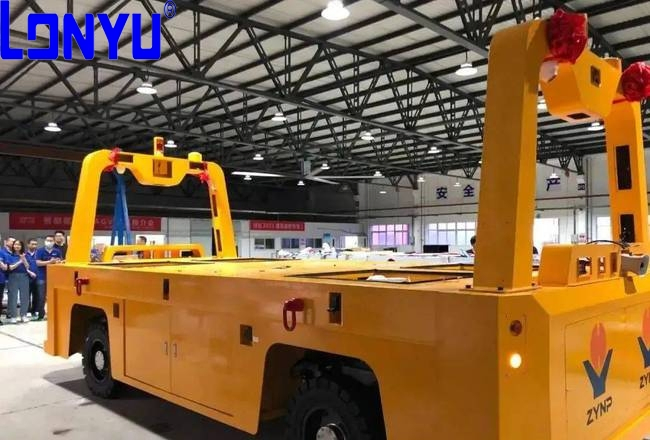
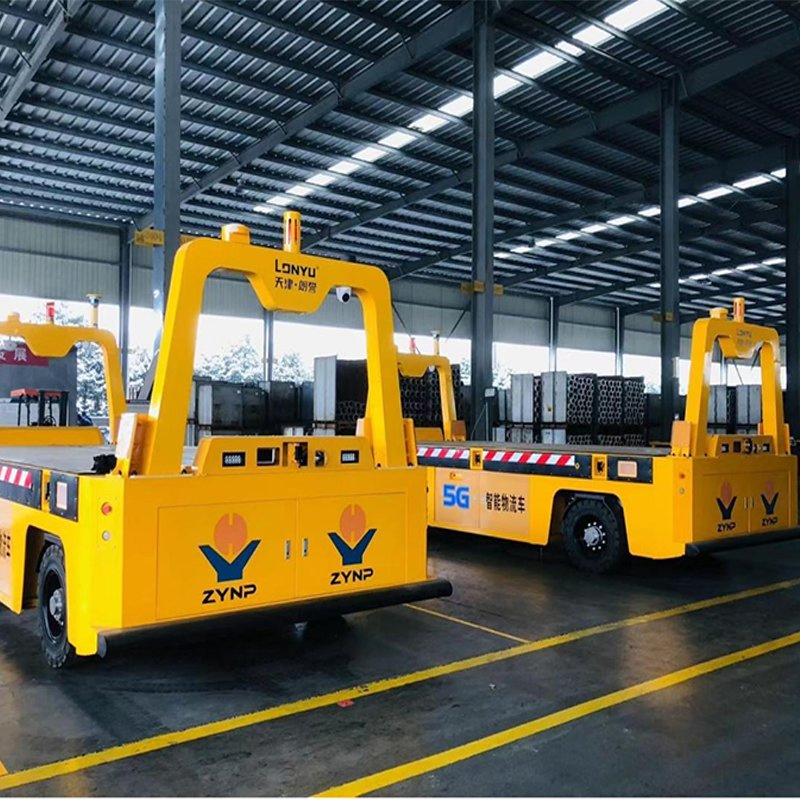
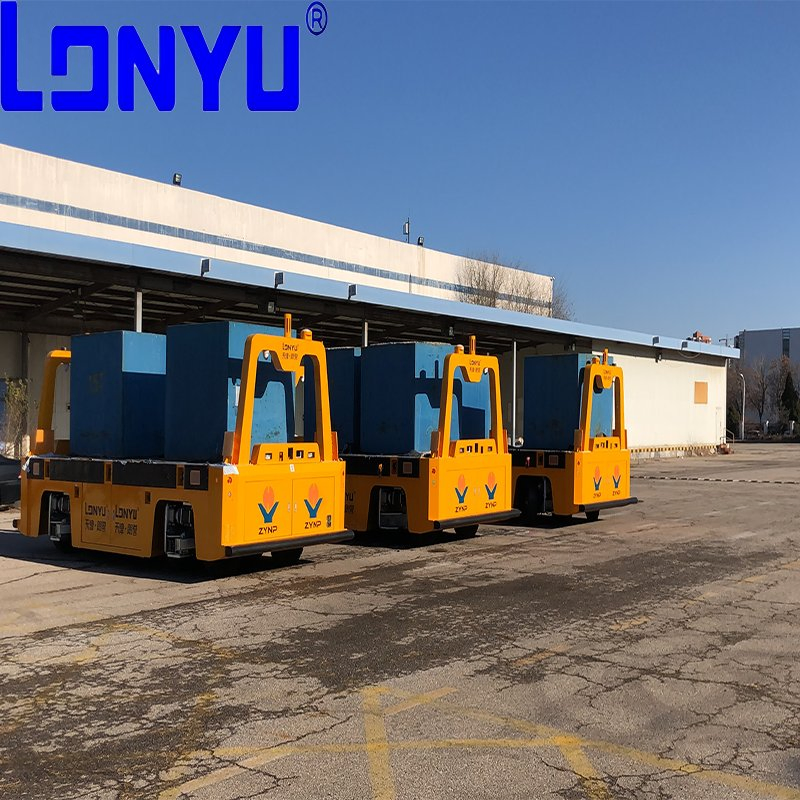
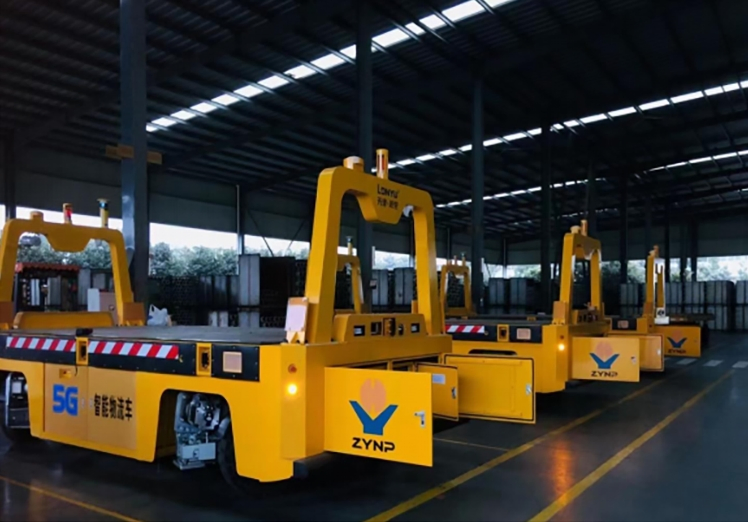
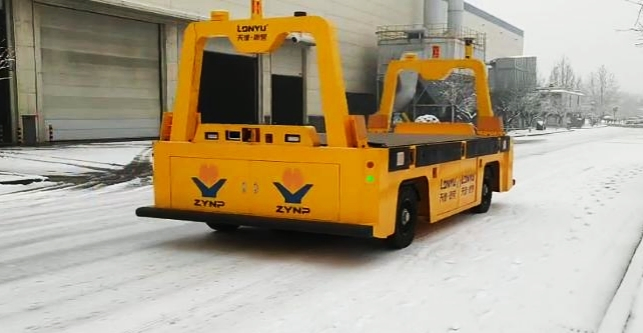
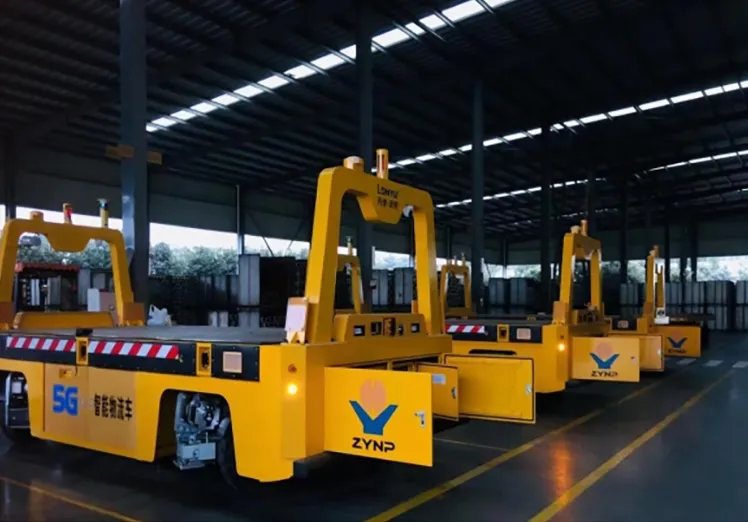
It is mainly responsible for transporting full baskets of casting blanks from the foundry to the blank warehouse. After loading, it is released by PDA and driven to the required destination through indoor and outdoor venues through the autonomous driving system.
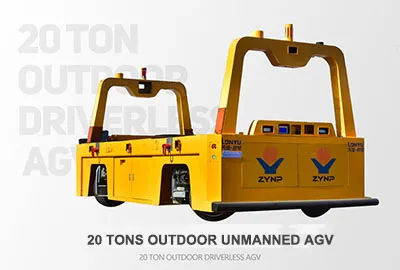
| Product name: | 20-ton outdoor unmanned AGV |
| Model: | LY-AK-20T-4-04-B-502 |
| Weight: | 13 tons |
| Loading weight: | 20 tons |
| Product size: | L6052*W2700*H1223 (to the vehicle table)/2826 (with gantry) |
| Drive type: | super drive |
| Number of super drives: | four-wheel drive and eight-wheel drive |
| Drive tonnage: | 10 tons |
| Remote control: | yes |
| Navigation method: | GPS+inertial navigation+visual navigation |
| Lifting: | piggyback |
| Suspension type: | spring |
| Turning radius: | 1792.5 |
| Explosion-proof: | no |
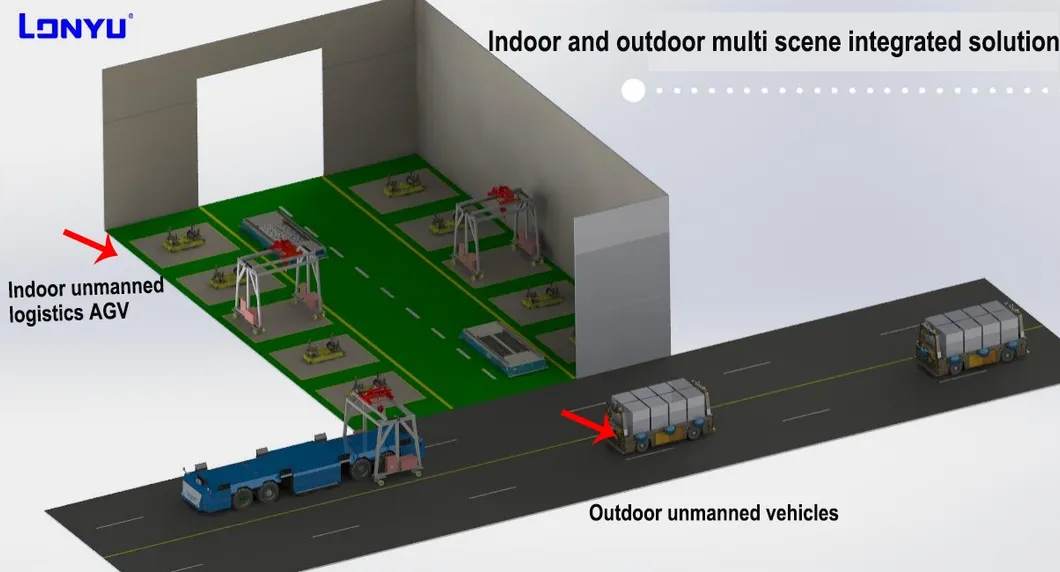
Satellite GNSS + Multi-line Laser + Inertial Navigation + Vision and other navigation options available.
Indoor environments utilize polyurethane-coated wheels, while outdoor environments are equipped with solid rubber tires to enhance load-bearing capacity.
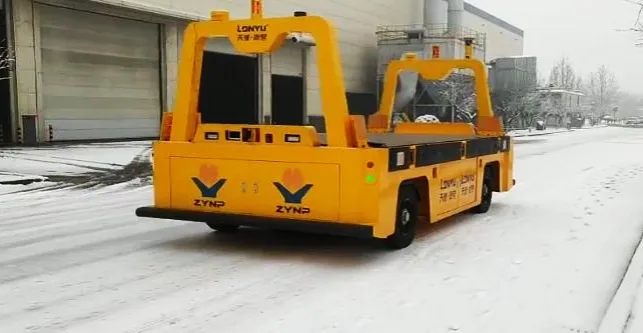
Warning lights, limit switches, emergency stop buttons, anti-collision buffers, and other safety protection devices enhance the stability of vehicle operation.
The AGV Control system is connected with Party A's MES system With automatic/manual dual insurance scheduling mode. Party A's MES system issues instructions for handling tasks to the AGV scheduling system. Then scheduling system issues instructions for handling to AGV vehicles. After the AGV completes the tasks, it feeds back the completion information to the MES system.
AGV central management software realizes highly intelligent automated management of AGV vehicles by monitoring and control of the running AGV, real-time dynamic monitoring of the position of the AGV vehicle in the electronic map, updating the operating parameters of the AGV, controlling the behavior of the AGV vehicle and implementing traffic control at the intersection, which helps operators improve work efficiency and ensure safe driving of vehicles.
This automatic charging device is developed to meet the need of frequent material delivery of production and logistics. When its energy is lower than the preset value at working, the AGV will move to the charging station and communicate with this charging device. After the connection establishment, the charge electrodes will dock with the AGV automatically to achieve automatic charging. The electrodes will be separated from the AGV automatically when it finishes the charging and the AGV moves back to the working area for material delivering. Thus, this device keeps the operator away from moving the heavy battery and the hassle of installation and disassembly, which greatly save charging time and make the whole system much more humanized and automated.