In the rapidly evolving world of automation, understanding the roles of Automated Guided Vehicles (AGVs) and Autonomous Mobile Robots (AMRs) is crucial. Many businesses wrestle with what is the difference between AGV and AMR. This distinction is not merely academic; it has real implications for efficiency and productivity in various industries.
AGVs follow pre-established paths, relying on guides like tracks or markers. Their predictability makes them excellent for repetitive tasks in controlled environments. On the other hand, AMRs navigate dynamically using advanced sensors and AI, allowing them to adapt to changing surroundings. This flexibility provides greater operational versatility, but it also introduces complexities in implementation.
Recognizing these differences can help organizations choose the right technology. However, this decision isn't straightforward. Factors such as installation, maintenance, and workforce readiness play significant roles. Striking a balance between efficiency and cost-effectiveness is essential. Businesses need to reflect on their specific needs before making a choice. Ultimately, understanding AGVs and AMRs is not just about technology; it is about enhancing operational efficiency in a competitive landscape.
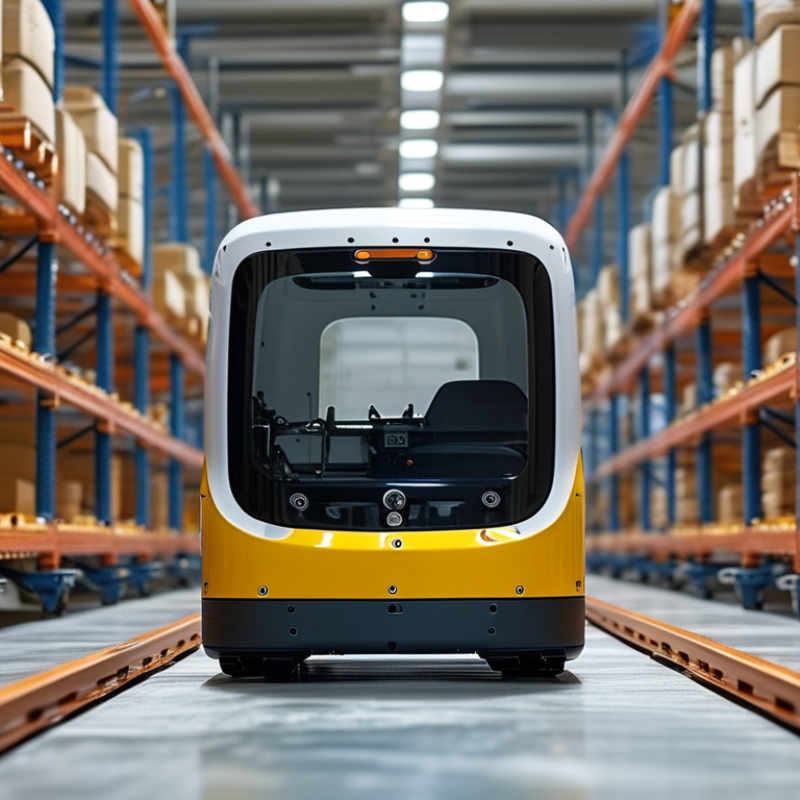
Automated Guided Vehicles (AGVs) are crucial in modern logistics and manufacturing. They are used to transport materials across a facility without human intervention. AGVs rely on predefined paths, often marked by magnetic strips or reflectors. This route specificity enhances safety and efficiency in high-paced environments.
Key features of AGVs include their navigation capabilities. According to a 2023 industry report, 70% of AGVs employ laser-guided technology. This permits more accurate and flexible routing compared to traditional methods. However, reliance on set paths limits their adaptability in dynamic environments. Though AGVs excel in repetitive tasks, they may struggle in scenarios that require decision-making.
Another significant aspect is load capacity. Most AGVs can handle loads ranging from 100 to 3,000 kilograms. Despite their strength, AGVs often face challenges in balancing agility and power. Many users have noted the difficulty in maneuvering around obstacles. Such limitations prompt organizations to reassess whether AGVs meet their specific needs. Overall, while AGVs enhance operational efficiency, understanding their constraints is vital for informed implementation.
Autonomous Mobile Robots (AMRs) are revolutionizing how industries manage logistics and operations. Unlike traditional Automated Guided Vehicles (AGVs), AMRs navigate independently. They utilize advanced sensors and artificial intelligence to move through complex environments. This ability allows them to adapt to changing surroundings. AMRs can also detect obstacles, reroute themselves, and optimize paths on the go.
One key feature of AMRs is their capacity for real-time data processing. They can communicate with each other and other systems, ensuring better coordination. For example, in a warehouse, an AMR can adjust its route if another robot is already occupied. However, this sophistication can lead to challenges. Programming AMRs often requires a depth of expertise. Companies may struggle if they lack in-house experience.
Despite their advancements, AMRs are not without limitations. Their reliance on technology can lead to vulnerabilities. They might misread signals in complex settings. Moreover, while they can learn, the learning curve can be steep, particularly in unfamiliar environments. Addressing these weaknesses is crucial for businesses aiming to implement AMRs effectively.
In industrial settings, distinguishing between Automated Guided Vehicles (AGVs) and Autonomous Mobile Robots (AMRs) is crucial. AGVs rely on predetermined paths and require minimal interaction with their environment. They are efficient for transporting materials in factories, but their rigidity can be a downside. For instance, if obstacles appear unexpectedly, AGVs may stop and await manual intervention. This can slow down operations and cause delays.
On the other hand, AMRs are designed for flexibility. They use advanced sensors and AI to navigate dynamically. This autonomy allows them to adapt to changing environments, effectively bypassing obstacles. AMRs excel in complex spaces and can even learn from their surroundings over time. However, their reliance on technology means they can encounter issues, such as software glitches or sensor failures. These challenges can impact their reliability in critical scenarios.
Both AGVs and AMRs have unique strengths and weaknesses. While AGVs provide simplicity and dependability in predictable settings, AMRs offer versatility in complex operations. Businesses must consider their specific needs and environments when choosing between them. Each option presents opportunities for improvement but also requires careful planning to mitigate potential drawbacks.
The AGV (Automated Guided Vehicle) and AMR (Autonomous Mobile Robot) markets are evolving rapidly. Recent studies show that the AGV market is projected to grow at a steady rate of 15% annually. In contrast, the AMR sector is outpacing this with an impressive growth rate of 25%. This disparity signals a shift in demand within logistics and manufacturing.
Current trends indicate a surge in automation adoption. Companies are investing more in AMR technology. AMRs offer flexibility and adaptability, catering to complex environments without extensive infrastructure adjustments. While AGVs have defined paths, AMRs navigate dynamically, addressing the need for efficiency.
However, the growth of both sectors reveals challenges. Many businesses still lack understanding of how to implement these technologies. Misconceptions about costs and capabilities persist. Educating the industry is essential to maximize the benefits of AGVs and AMRs. The future of automation lies in addressing these gaps while fostering innovation and efficiency across sectors.
Automated Guided Vehicles (AGVs) and Autonomous Mobile Robots (AMRs) play pivotal roles across various sectors. In manufacturing, AGVs streamline assembly line operations by moving materials between workstations. According to a 2022 industry report, 60% of manufacturers have adopted AGVs to enhance productivity. They can carry repetitive loads without human intervention, reducing labor costs. However, their dependence on predefined paths limits flexibility.
On the other hand, AMRs offer greater adaptability. They navigate complex environments using advanced sensors and machine learning. In warehouses, for instance, AMRs autonomously pick and transport goods. Research indicates that AMRs can improve operational efficiency by up to 30%. Retailers use AMRs for inventory management, where quick and accurate data capture is vital. Despite their advanced capabilities, AMRs face challenges in dynamic settings, necessitating continuous updates to their navigation systems.
Both AGVs and AMRs have specific use cases that can benefit numerous industries. The logistics sector relies heavily on AGVs for repetitive tasks, while AMRs address more complex sorting and delivery challenges. Understanding the nuances between these technologies is critical for businesses to choose the right solution. Companies must evaluate their operational needs and the potential for return on investment.
utomated Guided Vehicles (AGVs)?
Most AGVs use laser-guided technology for navigation. This makes their routing more accurate but limits adaptability.
AGVs can carry loads from 100 to 3,000 kilograms. However, they may struggle with agility around obstacles.
AMRs navigate independently using sensors and AI. They can adapt and optimize their routes in changing environments.
Unlike AGVs, AMRs move through complex spaces without predefined paths, allowing for greater flexibility.
AMRs need programming expertise for effective operation. Companies without in-house knowledge may face difficulties.
Yes, AMRs can share information and adjust their routes if needed, ensuring better coordination.
They can misread signals in complex settings and have a steep learning curve, especially in new environments.
AGVs excel in repetitive tasks but struggle with decision-making. Organizations should assess their specific needs carefully.
Knowing their features and limitations helps businesses implement these technologies effectively and avoid potential issues.
The article "How to Understand the Difference Between AGV and AMR?" explores the essential distinctions between Automated Guided Vehicles (AGVs) and Autonomous Mobile Robots (AMRs) within industrial settings. AGVs are characterized by their reliance on fixed paths and predefined routes, making them suitable for repetitive tasks. In contrast, AMRs leverage advanced sensors and AI technology, allowing for greater flexibility and adaptability in dynamic environments. The comparative analysis sheds light on their specific applications, highlighting that while AGVs excel in environments with set pathways, AMRs thrive in unstructured spaces where real-time navigation is crucial.
Furthermore, the article discusses market trends, indicating significant growth for both AGVs and AMRs, driven by advancements in automation technology. It presents practical use cases across various sectors, illustrating how businesses are increasingly integrating these vehicles to enhance operational efficiency. Ultimately, understanding "what is the difference between AGV and AMR" is vital for organizations looking to implement the right technology for their operational needs.

RAB Logistics